
Worldview #014 - Start Posting on LinkedIn

Do yourself a favour and post on LinkedIn. Seriously.
I completely understand if you don’t want to be a creator on Instagram or YouTube. Those platforms could demand a lot: consistency, time, energy video, editing. It can start to feel like a second job.
LinkedIn doesn’t (at least not yet). It is one of the very few places where you can simply write what you think and have the right people actually read it. So I insist that you write.
Getting a few minutes of someone’s focused attention today without being in the same room is rare. LinkedIn still allows that. And it allows you to do it without putting your face on camera if you do not want to.
More importantly, it has a very direct and practical impact on your career.
People form opinions. They remember your name when an opportunity comes up, respond faster when you reach out, may even refer you internally.
I have seen this repeatedly across executive profiles we have worked on at GrowedIn.
- Clients tell us that in meetings, people mention specific posts they wrote.
- They attract strong potential hires simply because candidates have been reading them.
- They stay top of mind with industry peers without actively networking every week.
The barrier to entry is almost non-existent. If you can write a clear email explaining a project update, you can write a LinkedIn post.
The bigger hurdle is psychological. We assume our work will speak for itself. It rarely does.
Good work is often invisible outside your immediate circle or team. Posting once or twice a week about what you are building, learning, fixing, or rethinking is a simple way to make your thinking visible.
If you’re 18-24, a student or a fresher, this is equally powerful. You can document your learnings.
Write about:
- A concept you struggled to understand and how you finally did
- A mistake you made during an internship
- A project you built and what did not work
- A book or case study that changed how you see your field
For example, instead of saying “Completed a marketing internship,” you could write about how you realized most campaigns fail because messaging is unclear, and how you tested 3 variations before one finally worked. That tells me far more about you than a line on a resume ever will.
If you are early in your career, posting builds clarity. If you are mid-career, it builds positioning. If you are senior, it builds influence.
If you want a simple framework on how to build a personal brand by documenting your work, I wrote a LinkedIn post breaking it down step by step. You can read it here:
 Aditi Negi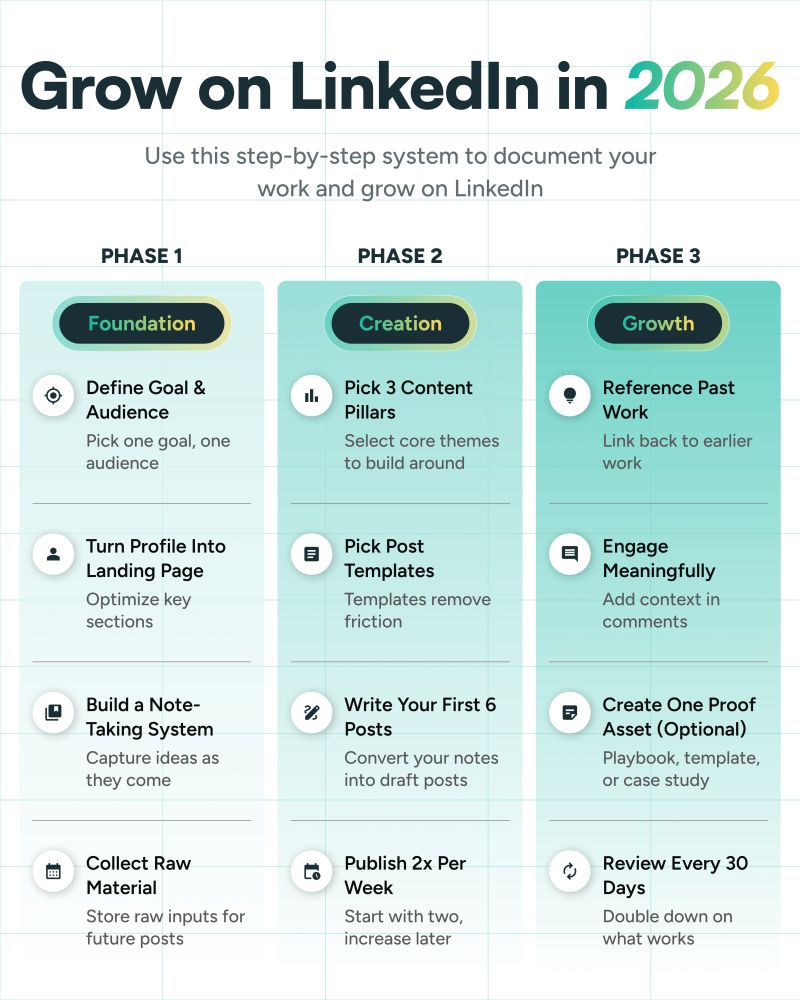
Subscribe to Worldview
Weekly notes on building a life you love and doing work you are proud of.